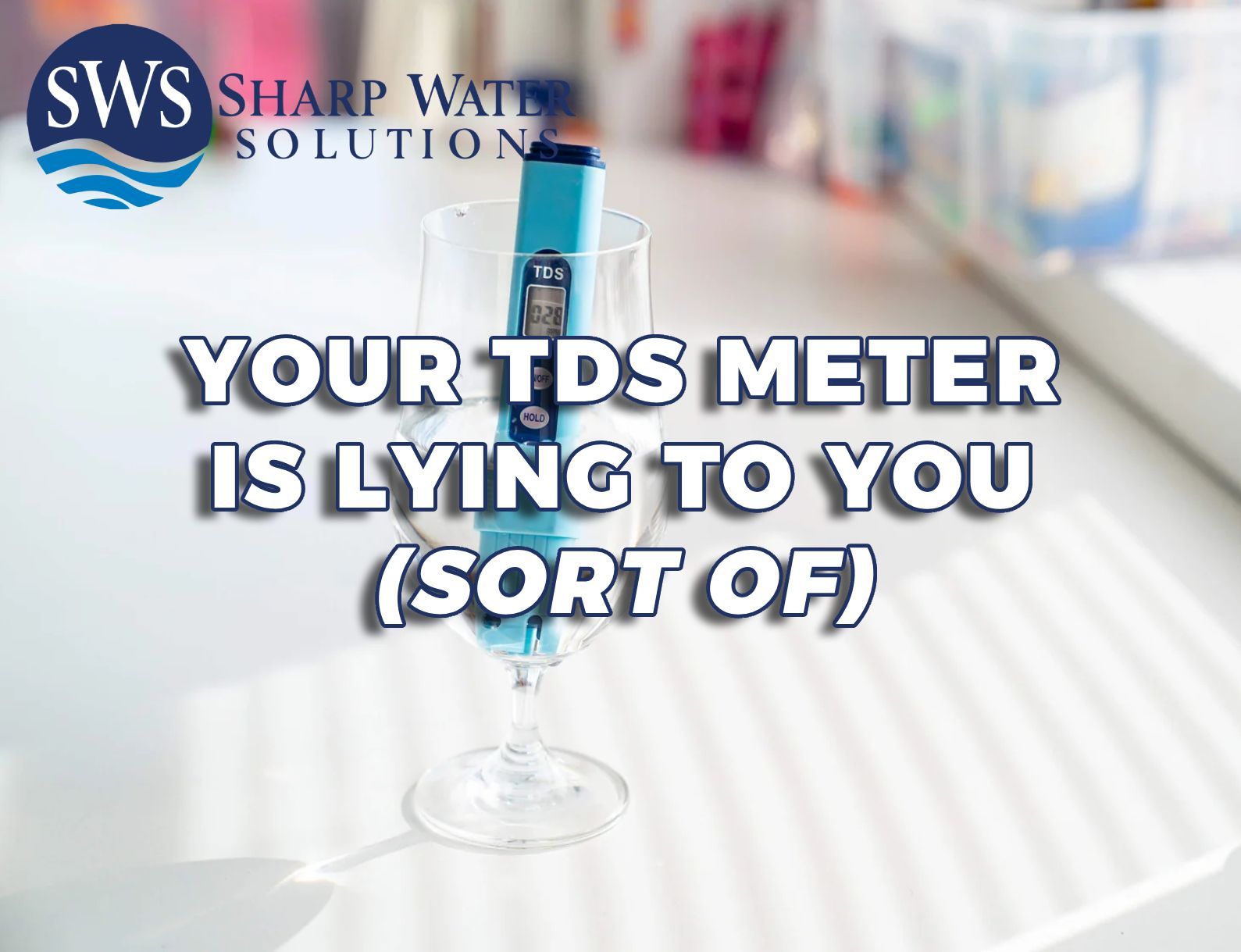
Your TDS Meter Is Lying to You (Sort Of)
What's wrong with a TDS meter?
In a junk drawer in Sandy, there’s almost certainly a little gadget from Amazon that’s caused more confusion than every Utah plumbing myth combined.
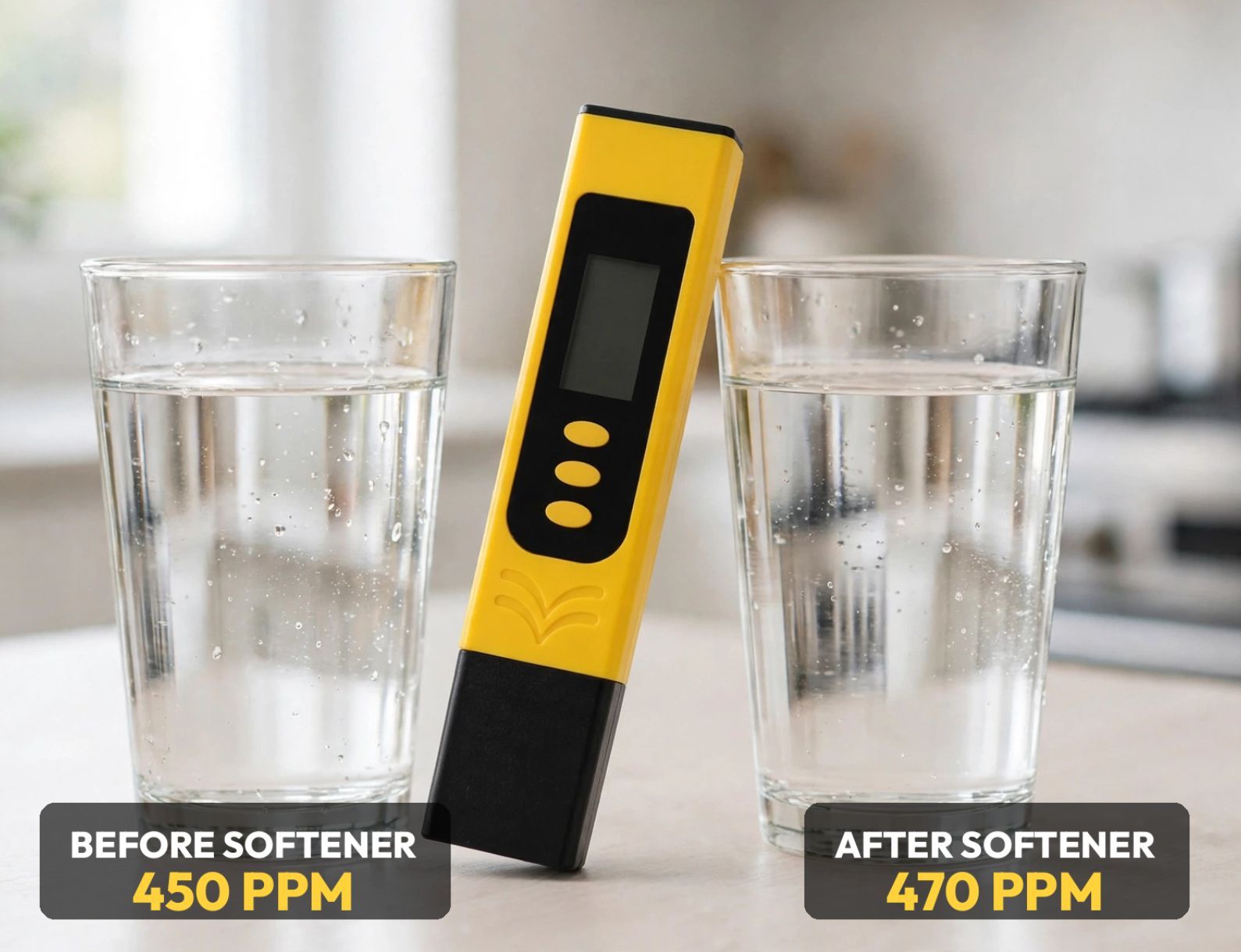
It’s a cheap TDS meter. You stick it in a glass of tap water, it reads something like 450, and next thing you know, you’re stressing out about whether your tap water is bad for your family.
It gets even weirder. Someone gets a brand-new water softener installed, tests the water the next day, and the meter jumps to 470. So they call us up, super frustrated: "Hey, this brand-new softener isn't even working!"
Here’s what’s actually happening: the meter isn’t broken. It’s just measuring something totally different than what you think.
What a TDS Meter Actually Measures
TDS stands for Total Dissolved Solids - everything dissolved in your water, measured in parts per million.
Calcium, magnesium, sodium, chloride, sulfate, a little of this, a little of that. The meter doesn't actually count any of it. It measures how well your water conducts electricity and converts that into a ppm estimate.
That's the catch. It can't tell calcium from sodium from anything else. It's a headcount with no names. Your Salt Lake tap water testing at 300 to 700 ppm just means there's a lot of stuff in there. It tells you nothing about which stuff, and that distinction is the whole game.
Why Your Softened Water Tests "Worse"
This is the phone call we get, and it's our favorite one to answer, because the homeowner thinks something's broken and nothing is.
A salt-based softener works by ion exchange. It grabs the calcium and magnesium - the minerals that make water hard - and swaps them for sodium. Out goes the scale-makers, in goes a little sodium instead.
So you test before: 450 ppm. You test after: 470 ppm. The softener didn't fail. It did exactly what it was built to do. It just traded one dissolved solid for another, and your twenty-dollar meter can't tell the difference. If anything, the number going up slightly is proof the exchange is happening.
A TDS meter will never, ever tell you whether your softener is working. Wrong tool for the job.
What TDS Meters Are Actually Good For
I'm not saying throw it in the junk drawer next to the bread maker. The meter has one job it's genuinely great at: checking a reverse osmosis system.
An RO membrane strips out nearly everything - down below 30 ppm from your kitchen tap. That's a number even a cheap meter can verify. Test your RO water every few months. If it starts creeping up past 50 or 75, your membrane or prefilters are done. That's useful to know.
It'll also flag a big sudden change. If your tap has tested 400 for a year and suddenly reads 900, something changed upstream and it's worth a look. But as a hardness gauge? Useless.
Test Strips: Better, But Still Imprecise
Test strips are specifically made for hardness and measure in grains per gallon (GPG). They give a quick general idea of whether your water is hard or soft.
However, they aren't very precise. The color blocks cover wide ranges, indoor lighting can make colors look different, and older strips can give inaccurate readings. Relying on an approximate color match isn't ideal when setting up your water treatment equipment.
Precision is important here. Setting a softener for 12 grains when your actual hardness is 22 grains means the unit won't regenerate often enough, leading to hard water passing through to your plumbing and water heater.
How We Accurately Test Utah Water
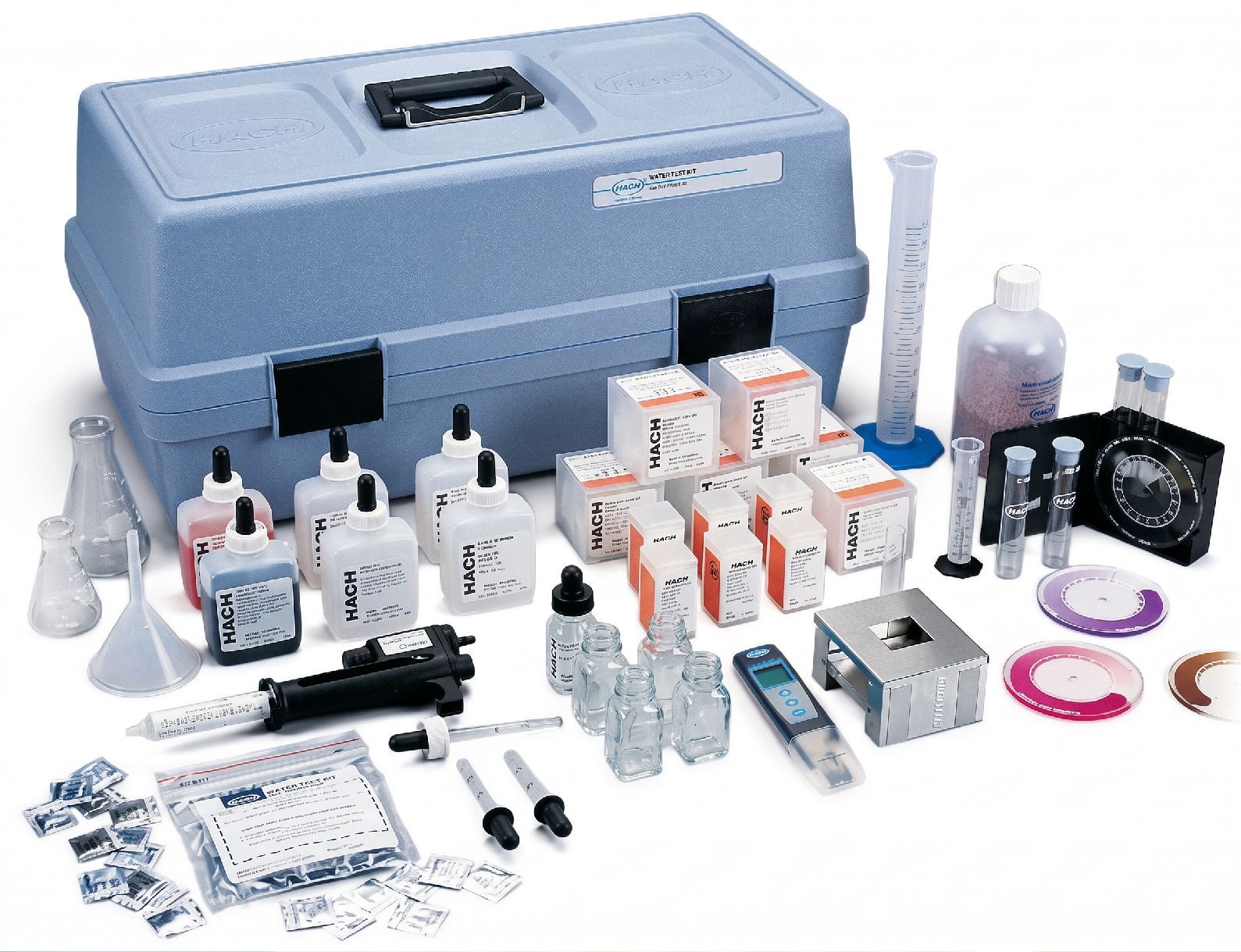
To get exact measurements, we perform a liquid titration drop-count test right at your sink. Adding drops until the liquid changes color reveals your exact hardness in grains per gallon without any guesswork.
We use that precise figure to size equipment correctly and program the control valve specifically for your neighborhood's water profile rather than relying on standard factory settings. We’ve used this method for over twenty years across the Salt Lake Valley because accurate calibration makes all the difference with Utah water.
Keep your TDS meter for monitoring your RO drinking system, but when you need to check water hardness or evaluate a softener, rely on proper testing methods.
Questions About Your Water Test Results?
If you have questions about your water test numbers, give Sharp Water Solutions a call at 801-233-3325 or reach out through our website.
We offer free in-home water testing to help you get clear answers and equipment calibrated for your home.